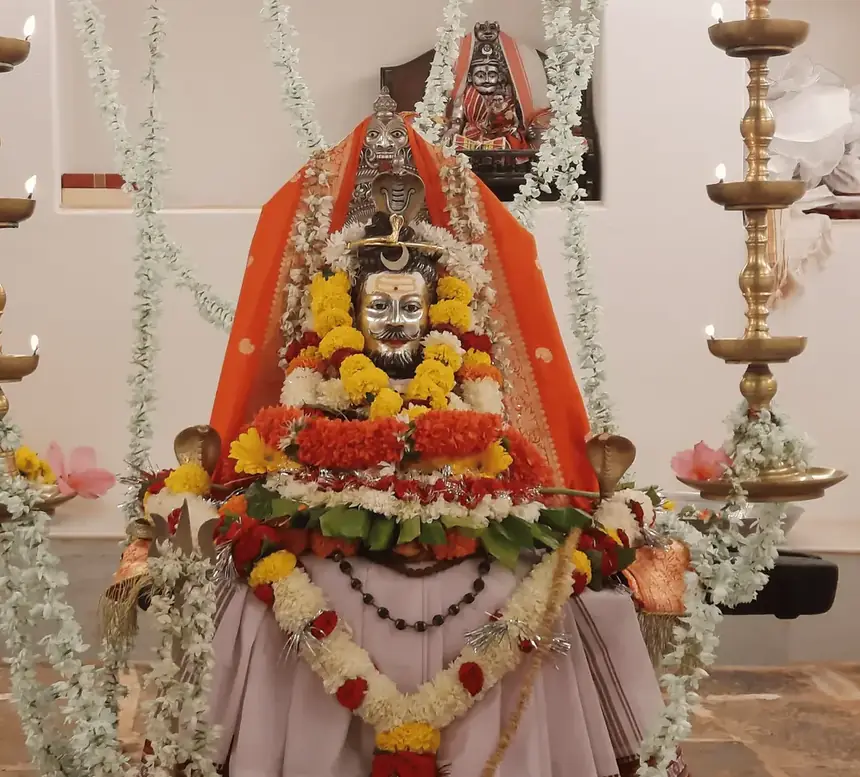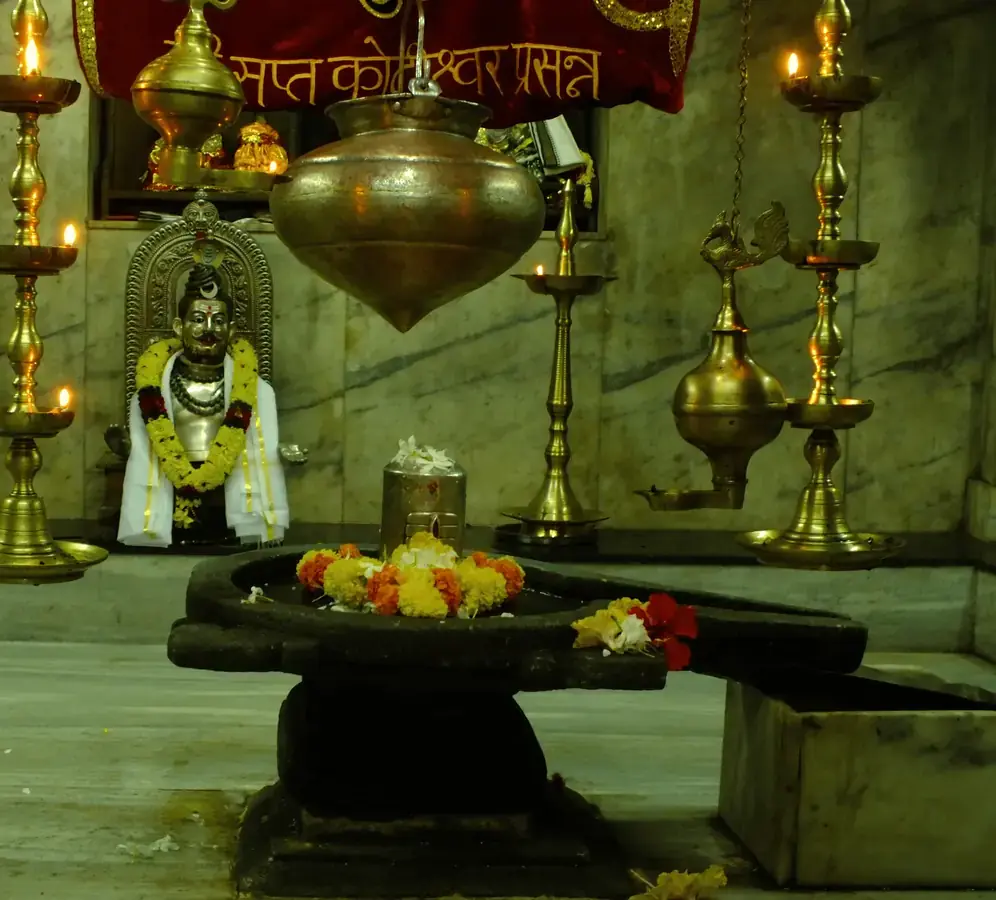
Samai lamps burning before the Atma-Ling in the laterite cave sanctum at Narve

श्री सप्तकोटीश्वर देवस्थान

कर्पूरगौरं करुणावतारं संसारसारं भुजगेन्द्रहारम् । सदा वसन्तं हृदयारविन्दे भवं भवानीसहितं नमामि ॥

Ever dwelling in the lotus of the heart — to Bhava, with Bhavani, I bow.

Right now Open for darshan
Next aarti Evening Aarti
Tonight Palkhi every Somvar
Moon
Enter
In brief

A deity carried out of reach, and never set down.

In 1541 CE the temple at Naroa was demolished and worship of the deity was made a crime. Rather than surrender the Atma-Ling, devotees concealed the same and carried it across the Mandovi by night. It has been worshipped every single day since.

1148
Kadamba era

Consecrated at Naroa, Divar Island

Established under the Kadamba dynasty as the kuldevata of the royal family, and revered throughout the Konkan as one of the principal Shaivite kshetras of the region.

Finds mention in the Sahyadri Khanda and the Saptakotishadhyan. It is believed that Lord Shiva manifested Himself here as an Atma-Ling, pleased by the penance of the Sapta Rishis.
1352
First attack

The shrine is desecrated

The shrine is attacked and damaged. Worship is thereafter restored and continues at Naroa for nearly two more centuries.

1541
Prohibition

Demolished. Worship banned.

Under the Portuguese religious prohibition the temple at Naroa is demolished and idol worship banned outright. Rather than surrender the sacred Atma-Ling, devotees conceal the same.

The eight years that follow are the very reason this temple exists today. No structure, no priest, no public rite — only a concealed Ling, and devotees who would not part with it.

1549
The crossing

Carried across the Mandovi

Shri Narainrao Shenvi Suriarao, Sardesai of Bhatagram, shifts the Ling across the river and re-consecrates the same at Narve, then known as Hindale — beyond the reach of the prohibition.

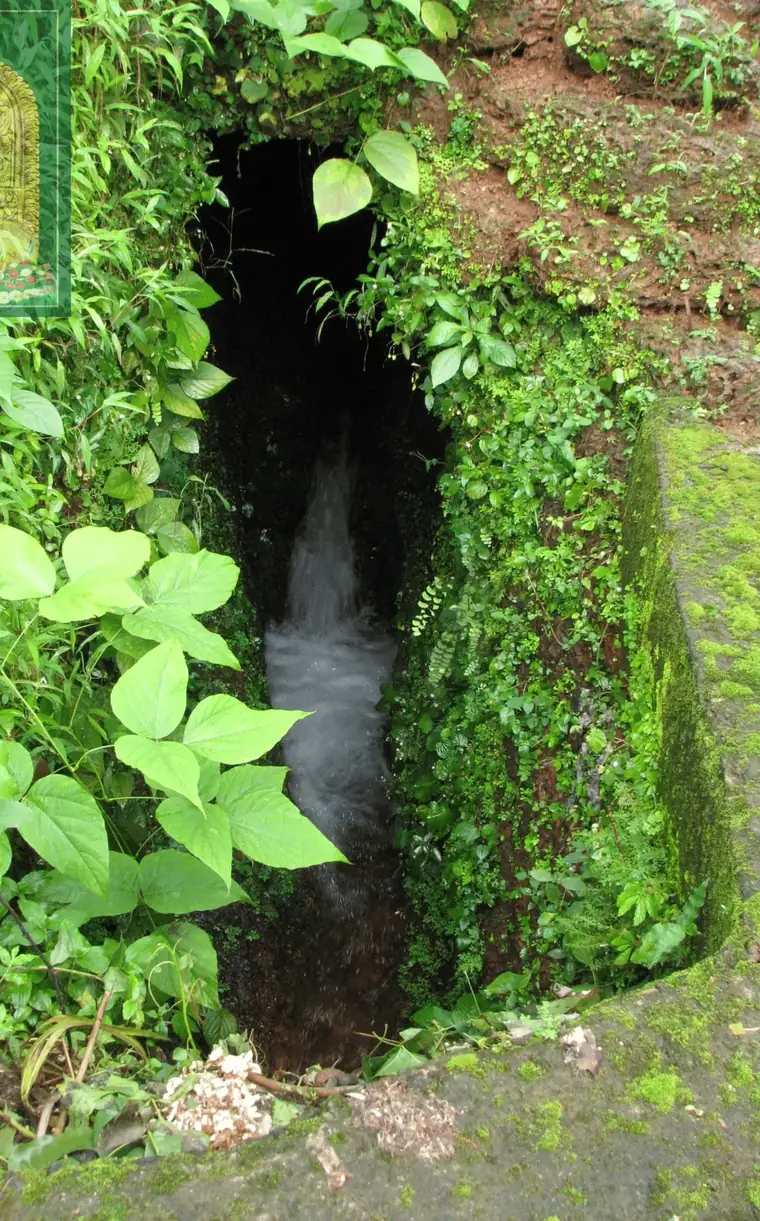
A cave shrine in the laterite becomes the new garbhagriha. The same serves as the sanctum sanctorum to this day.

1668
Restoration

Chhatrapati Shivaji Maharaj raises the temple

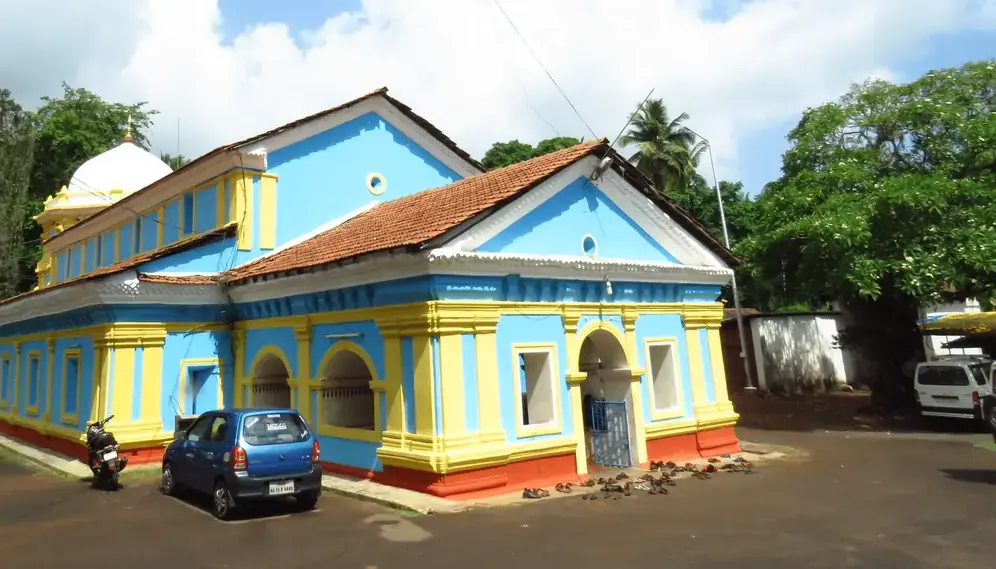
Chhatrapati Shivaji Maharaj commissions a full temple above the existing cave shrine, deliberately preserving the original laterite sanctum instead of replacing the same.

The Sabhamandap and the Deepstambh date from this reconstruction.

Today
Ekadash Teerth

A living kshetra

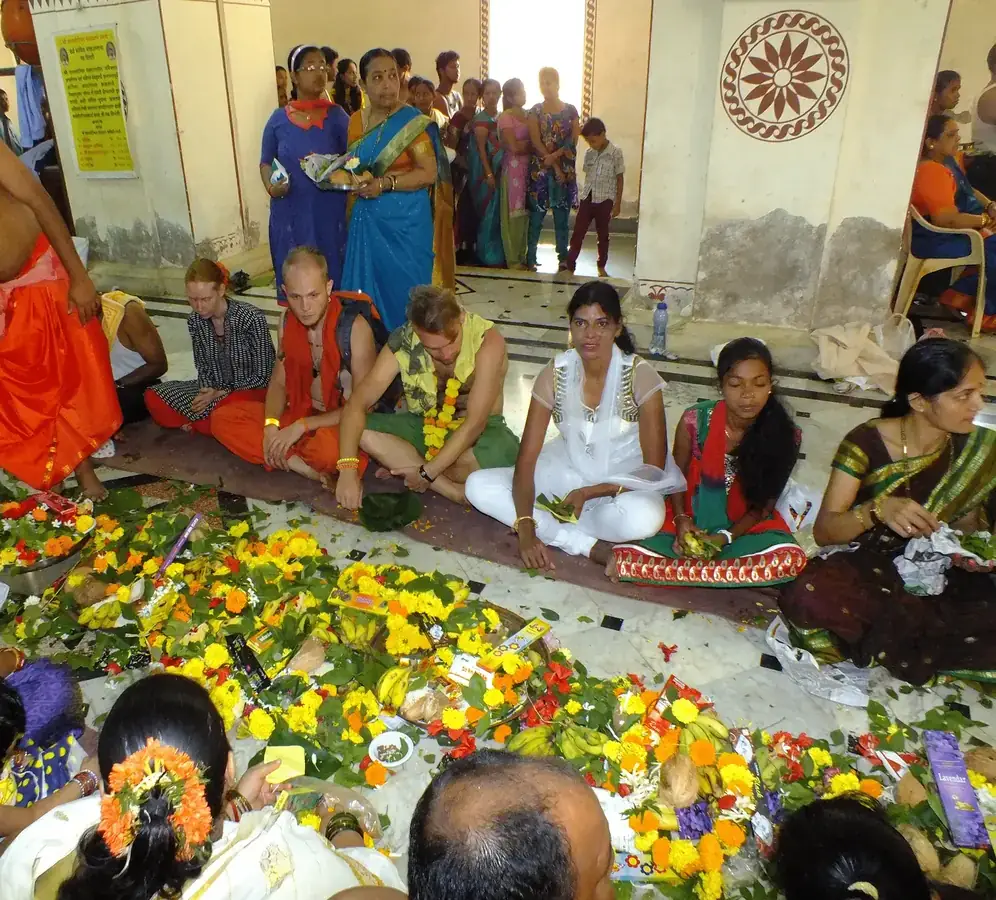
Daily abhishek and aarti, Palkhi on every Somvar and Ekadashi, and eighteen annual observances. The kshetra now forms part of Goa Tourism’s Ekadash Teerth Darshan circuit.

Recent renovation work has brought to light sealed chambers, wells and passages beneath the premises, which are still being documented.

The cobalt and ochre painted temple at Narve
Chhatrapati Shivaji Maharaj raised the temple around the cave, and not over it. That single decision is why a sixteenth-century sanctum still stands inside it.
1668 CE · The reconstruction
Temple time
Paksha
Moon
Palkhi
Next

The temple keeps the lunar calendar. Dates above are computed for Indian Standard Time; the tithi named against each utsav is the Devasthan’s own reckoning, which is authoritative.

Darshan

Approximately 17 km from Panaji

Devotees may proceed via the Ribandar–Chorao ferry and continue onward through Naroa. Regular bus service is not available from Bicholim; kindly hire a taxi or travel by own vehicle via Piligao.

Darshan timings are 7:00 AM to 7:00 PM on all days of the year. Prasad is distributed free of cost after every aarti.