The premises
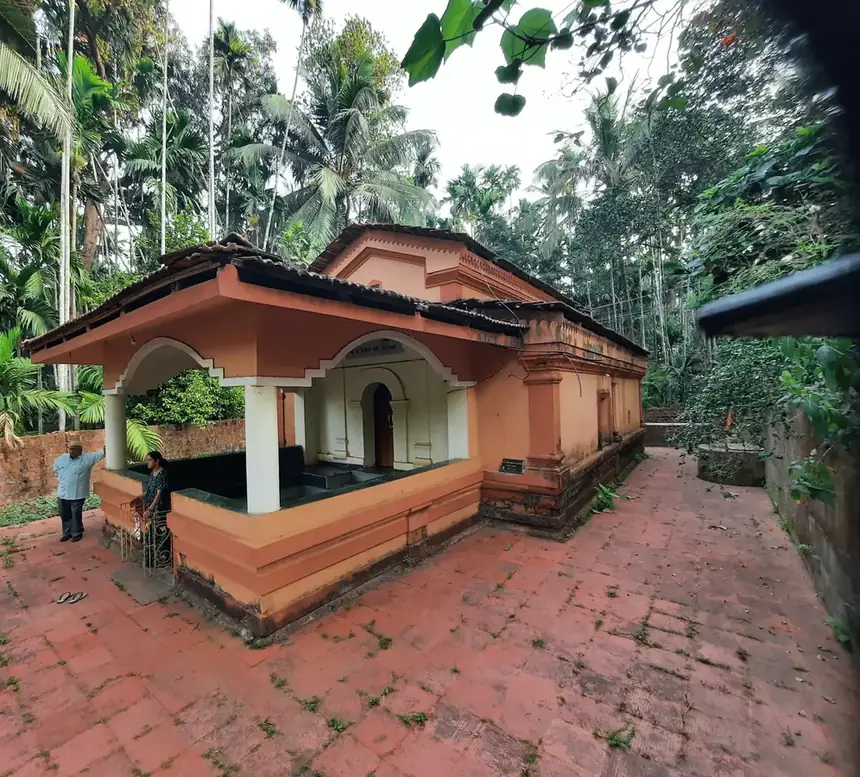
A shelter raised around a cave
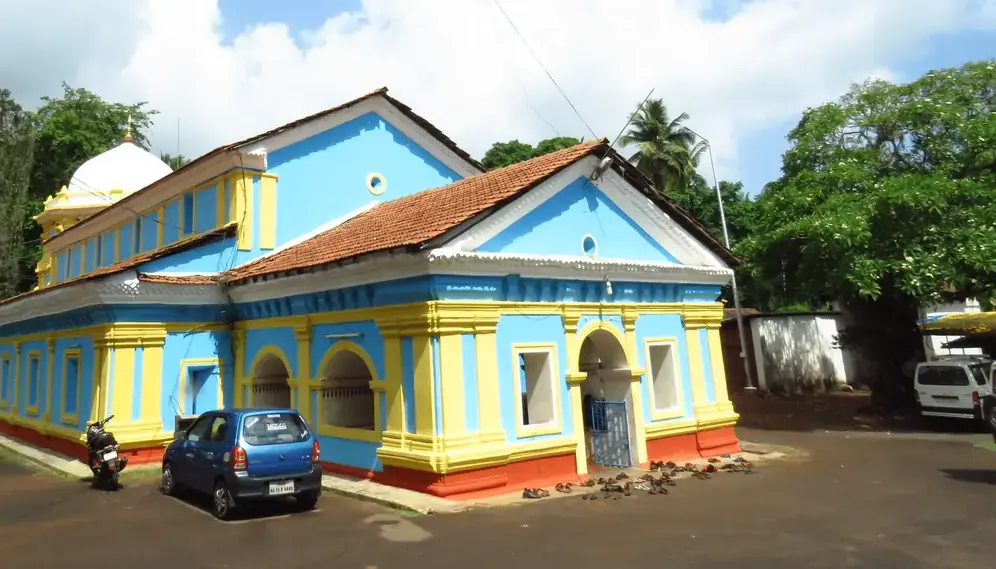
All that stands above ground is 17th-century Maratha stonework. The sanctum sanctorum itself is far older, and lies beneath.
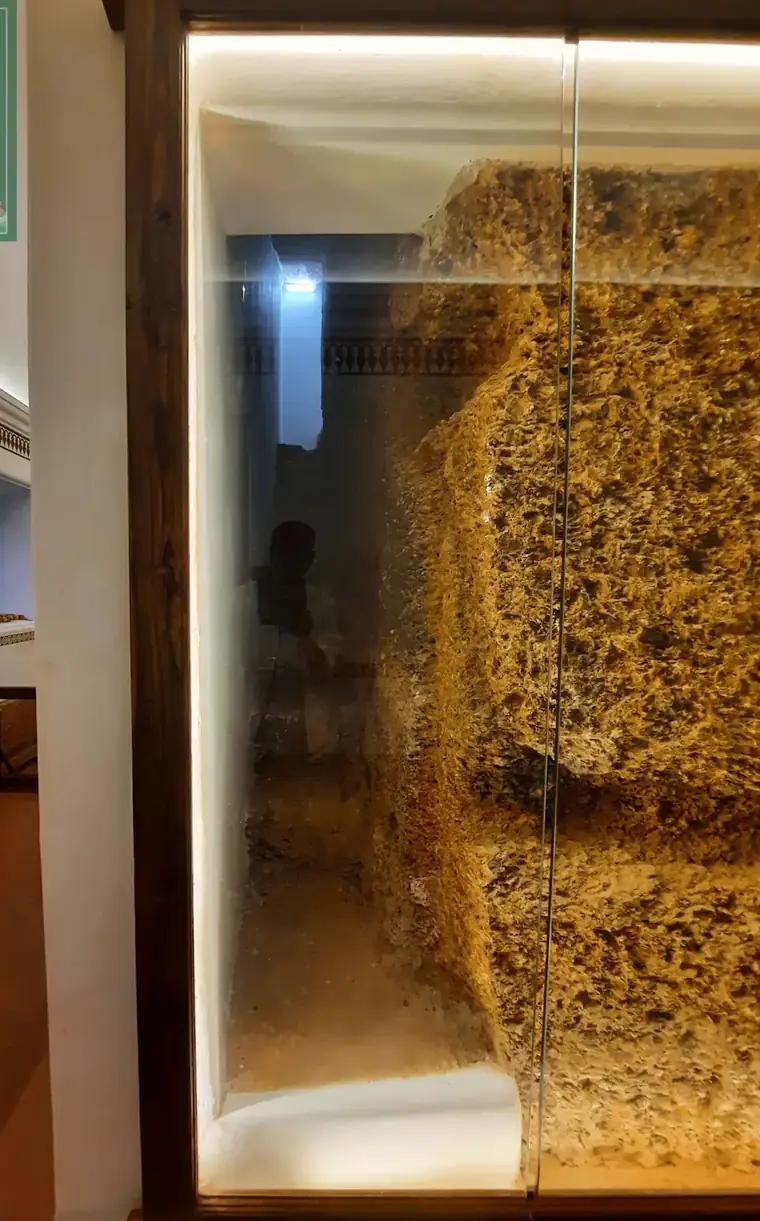
The sanctum is not masonry. It is a cave.
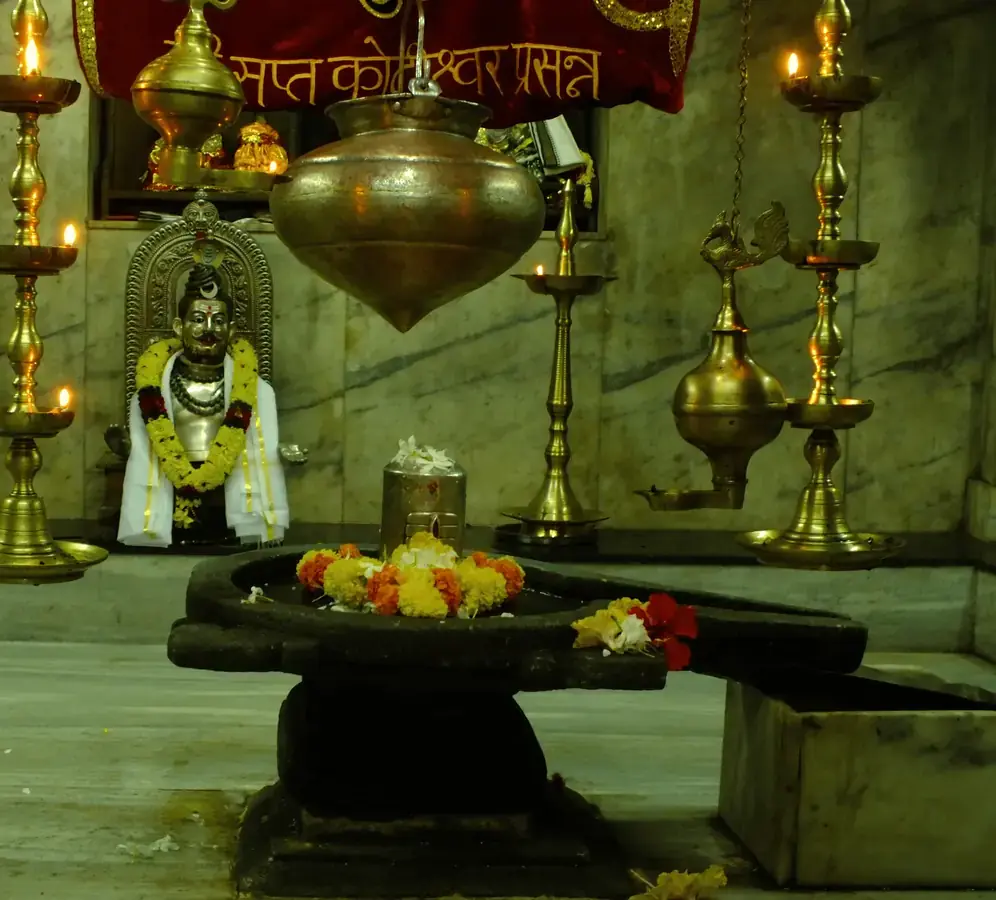
The Garbhagriha is the original laterite cave in which the Ling was installed in 1549 CE, kept deliberately unaltered when the temple was raised around the same more than a century later.
The pradakshina path follows an older Shaivite pattern rather than the usual Goan plan — one among several details indicating that the shrine was adapted to the site, and not the site chosen for the shrine.
01
Garbhagriha
The laterite cave sanctum sanctorum housing the Atma-Ling. Photography inside is strictly prohibited.
02
Sabhamandap
The assembly hall added during the reconstruction of 1668 CE, where devotees gather for aarti.
03
Deepstambh
The lamp tower lit for the evening aarti and on utsav nights — the landmark of the kshetra after sunset.
04
The Talli
The sacred lake at the north-eastern end, fed by natural springs and reserved for ritual. Bathing is strictly prohibited.
The passages beneath
Restoration work has brought to light chambers, wells and a stone passage running beneath the premises — consistent with a shrine raised in a period when concealment was a practical necessity.
The same are presently under survey. A good portion of what lies below the temple is yet to be documented.
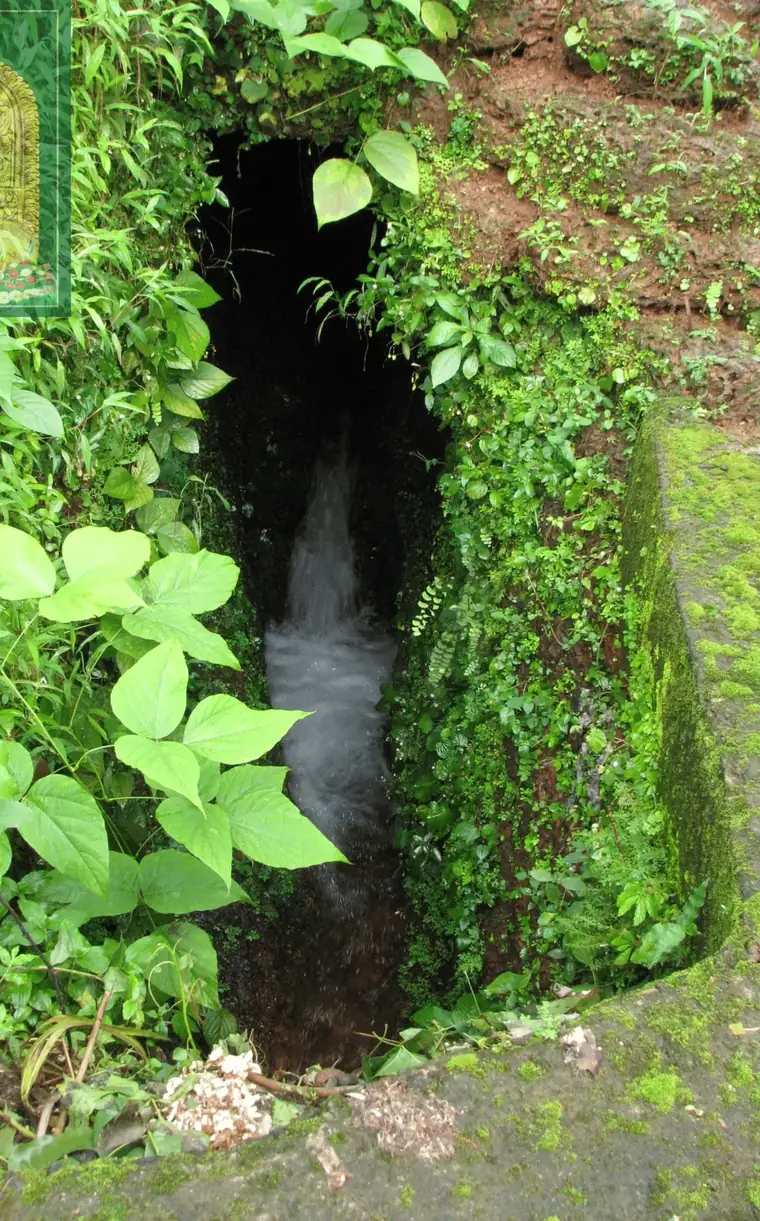
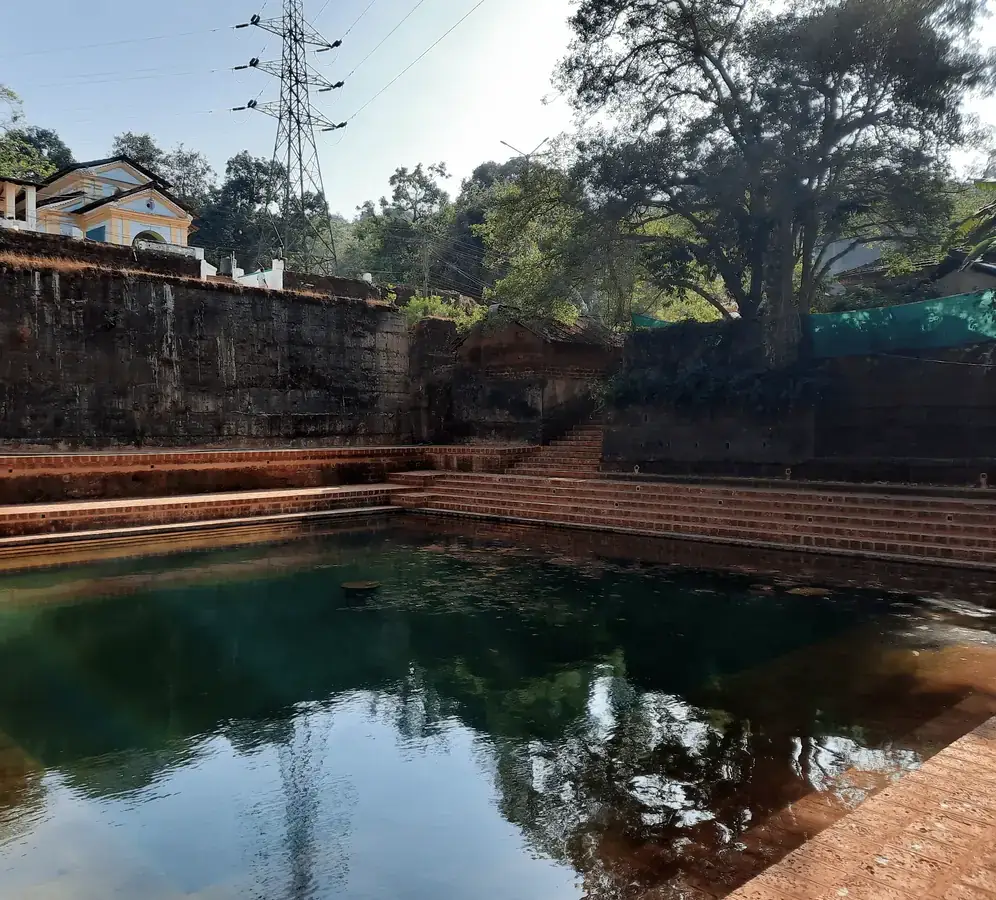
The Talli is fed by natural freshwater springs and is reserved entirely for religious rituals. Bathing in the sacred lake is strictly prohibited.The Talli · north-eastern precinct
Shri Saptakotishwar does not stand alone.
Within the same premises are the guardian deity, two goddesses, and the ancestral shrines of the families who brought the Ling here.
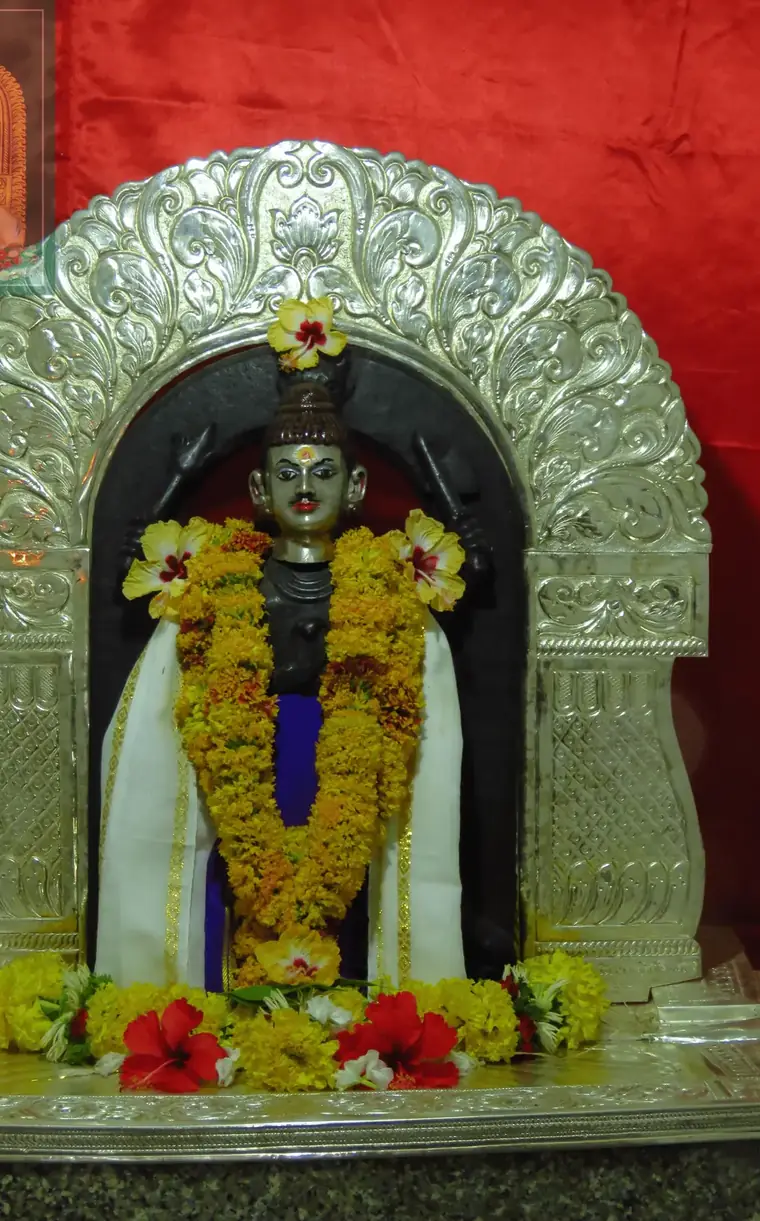
Shri Kalbhairav
Depicted as Chaturbhuj, bearing the Trishul, sword, Kapala and Damru, with the dog as His vahana. Worshipped on Sundays, Mondays and Tuesdays with black sesame, oil, and charity offered to dogs. His Palkhi accompanies Shri Saptakotishwar during every major utsav.
Shri Arya Durga & Shri Bhagwati
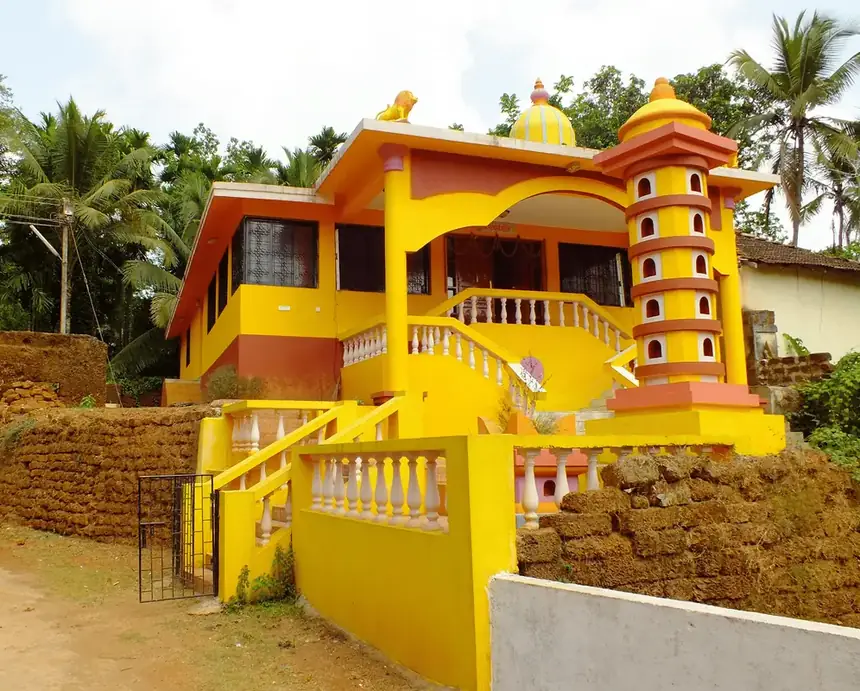
Two goddess shrines within the same premises, each having their own observances. Narve village is having several other heritage sites, all reachable on foot from the temple gate.
The Mulpurush shrines
Shrines of the Divadkar and Shetkar Divkar families — the households whose ancestors concealed and shifted the deity to safety. Every Kartik, the Palkhi proceeds to the samadhi of Shri Narainrao Suriarao Sardesai.